


▼
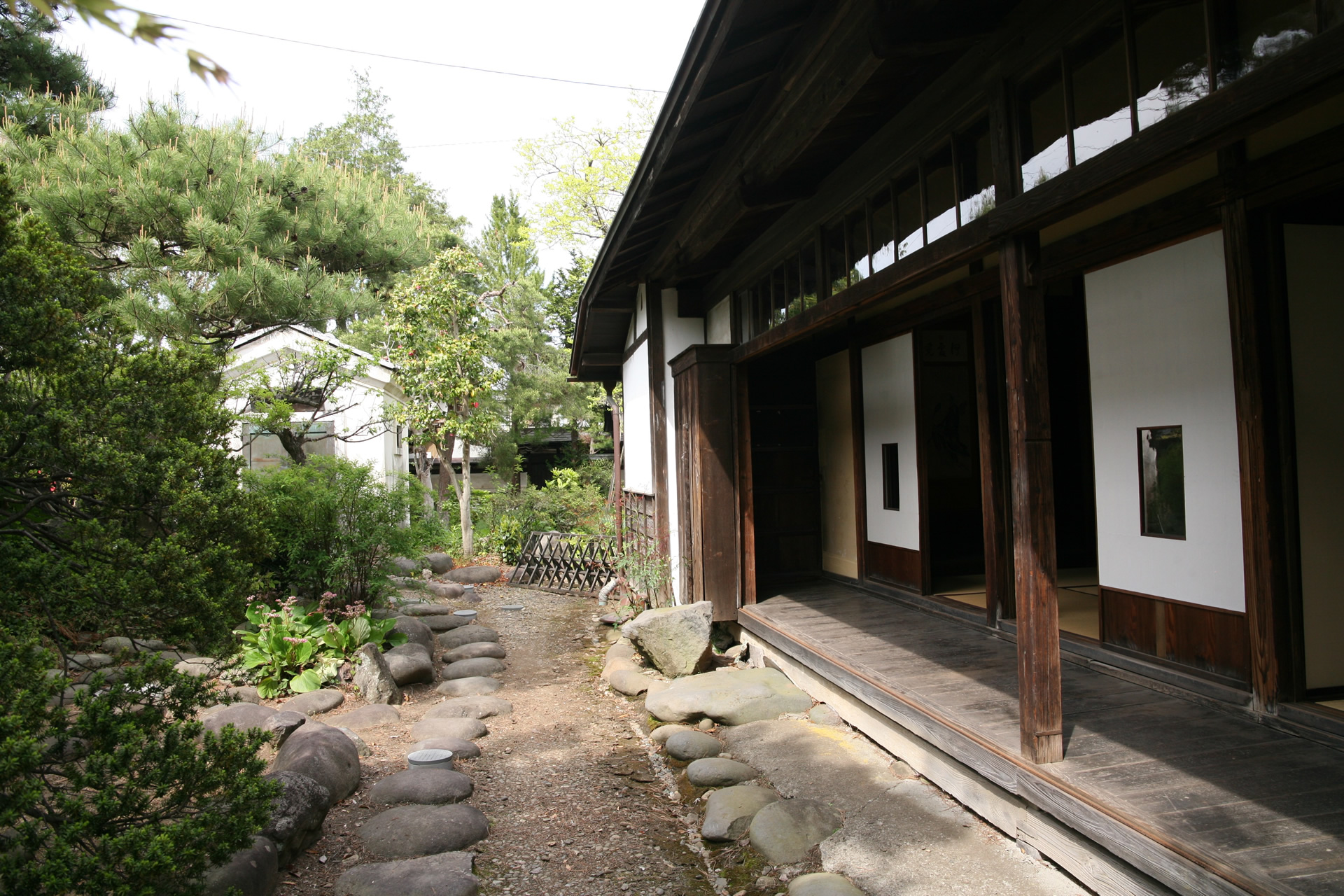
Choei Takano Place of Birth
This site is the birthplace of Choei Takano, a scholar of Dutch learning from the late Edo period. Choei Takano was born on May 5, 1804, as the third son of Sosuke Goto, a vassal of the Mizusawa-Date clan, and Miya, the daughter of Gentan Takano, another vassal of the Mizusawa-Date clan. He was born into a family of scholars in Dutch learning. At the age of nine, Choei lost his father Sosuke, and was raised as the adopted son of his maternal uncle in the Takano family.
During this period, Japan, represented by the Tokugawa shogunate, had a policy of sakoku, or national isolation, which restricted trade with all countries except for a few. Due to this policy, Japan fell behind Europe and America in various fields, including medicine, astronomy, military science, and democratization.
Choei Takano, with a vision to modernize Japan and for the benefit of the common people, decided to study Dutch learning (Rangaku), which was one of the few fields of knowledge accessible through trade with the Netherlands. At the age of 17, he left for Edo (modern-day Tokyo) to study Dutch medicine. He then traveled to the trading port of Dejima in Nagasaki, where he attended Narutaki Juku (school), established by Siebold from the Netherlands, to study a wide range of subjects including medicine, science, history, and politics through Dutch learning. Choei also wrote on various topics, including books promoting the cultivation of buckwheat and potatoes in preparation for famine, and on the study of physiology, becoming one of the pioneers of the field in Japan.
In 1837, the Tokugawa shogunate attacked and drove away the Morrison, a ship that had come with rescued Japanese castaways. Choei, in his work “Yume Monogatari” (Dream Story), wrote about what he saw and heard in a gathering in a dream. He wrote of the need to welcome rather than repel foreigners. This critique of the shogunate’s actions led to his arrest, and he was sentenced to life imprisonment.
In 1844, after taking advantage of a fire to escape from prison, he continued to evade capture with the help of numerous students and the lord of Uwajima domain. During this time, he also wrote translated works on various subjects including medicine, astronomy, and military science. On 30 October 1850, he was ultimately attacked by officials of the shogunate in his hideout in Edo and passed away at the age of 47. Later, on July 4, 1898, his achievements in life, where he had worked for the people and the future of Japan, were reevaluated. He was posthumously honored with the prestigious rank of “Shoshi” (Senior Fourth Rank) by Emperor Meiji, and Choei’s honor was restored.
During this period, Japan, represented by the Tokugawa shogunate, had a policy of sakoku, or national isolation, which restricted trade with all countries except for a few. Due to this policy, Japan fell behind Europe and America in various fields, including medicine, astronomy, military science, and democratization.
Choei Takano, with a vision to modernize Japan and for the benefit of the common people, decided to study Dutch learning (Rangaku), which was one of the few fields of knowledge accessible through trade with the Netherlands. At the age of 17, he left for Edo (modern-day Tokyo) to study Dutch medicine. He then traveled to the trading port of Dejima in Nagasaki, where he attended Narutaki Juku (school), established by Siebold from the Netherlands, to study a wide range of subjects including medicine, science, history, and politics through Dutch learning. Choei also wrote on various topics, including books promoting the cultivation of buckwheat and potatoes in preparation for famine, and on the study of physiology, becoming one of the pioneers of the field in Japan.
In 1837, the Tokugawa shogunate attacked and drove away the Morrison, a ship that had come with rescued Japanese castaways. Choei, in his work “Yume Monogatari” (Dream Story), wrote about what he saw and heard in a gathering in a dream. He wrote of the need to welcome rather than repel foreigners. This critique of the shogunate’s actions led to his arrest, and he was sentenced to life imprisonment.
In 1844, after taking advantage of a fire to escape from prison, he continued to evade capture with the help of numerous students and the lord of Uwajima domain. During this time, he also wrote translated works on various subjects including medicine, astronomy, and military science. On 30 October 1850, he was ultimately attacked by officials of the shogunate in his hideout in Edo and passed away at the age of 47. Later, on July 4, 1898, his achievements in life, where he had worked for the people and the future of Japan, were reevaluated. He was posthumously honored with the prestigious rank of “Shoshi” (Senior Fourth Rank) by Emperor Meiji, and Choei’s honor was restored.
Materials
-
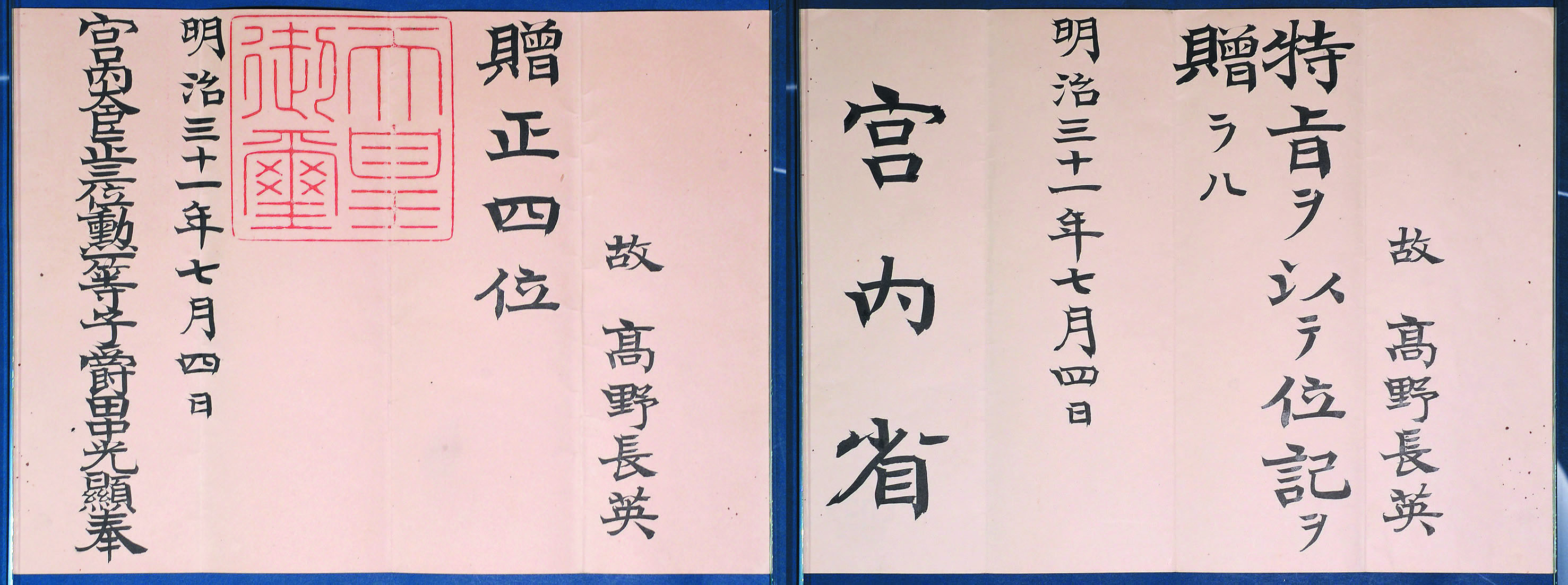
Therefore, a gift letter from Takano Nagai Wan's throne, a foreign letter -
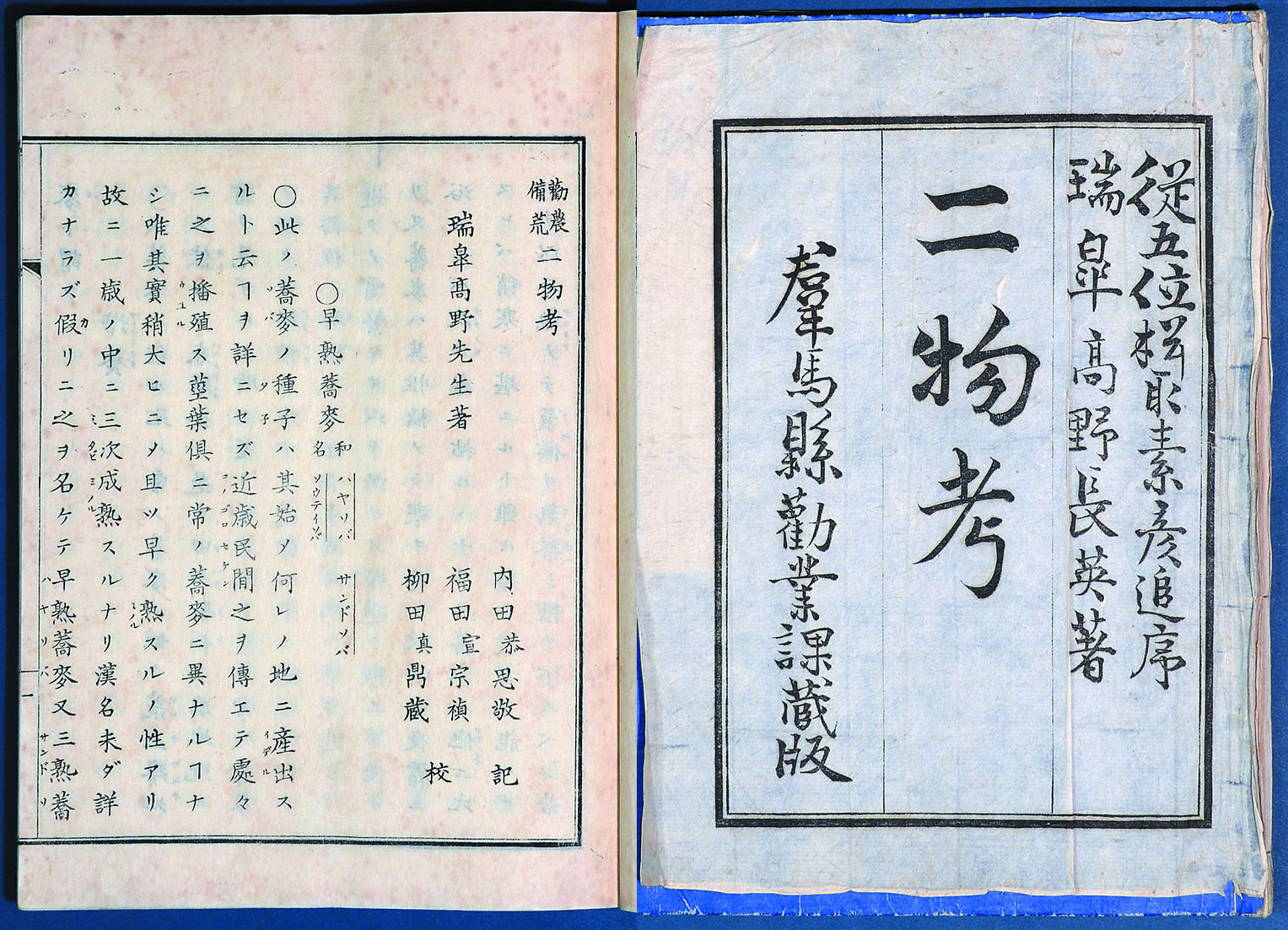
Two things test -
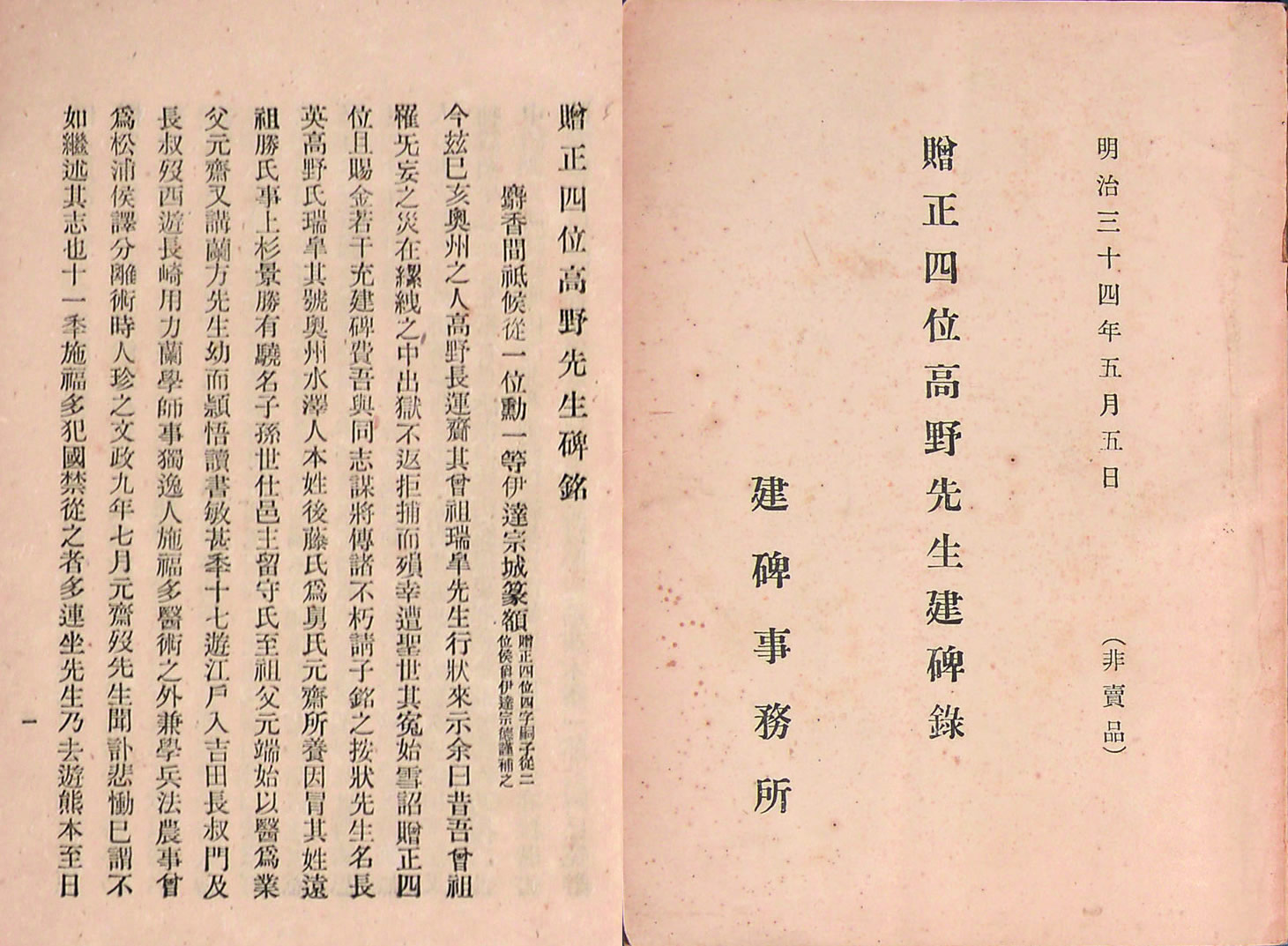
Inscription of Professor Takano, fourth rank of gift -
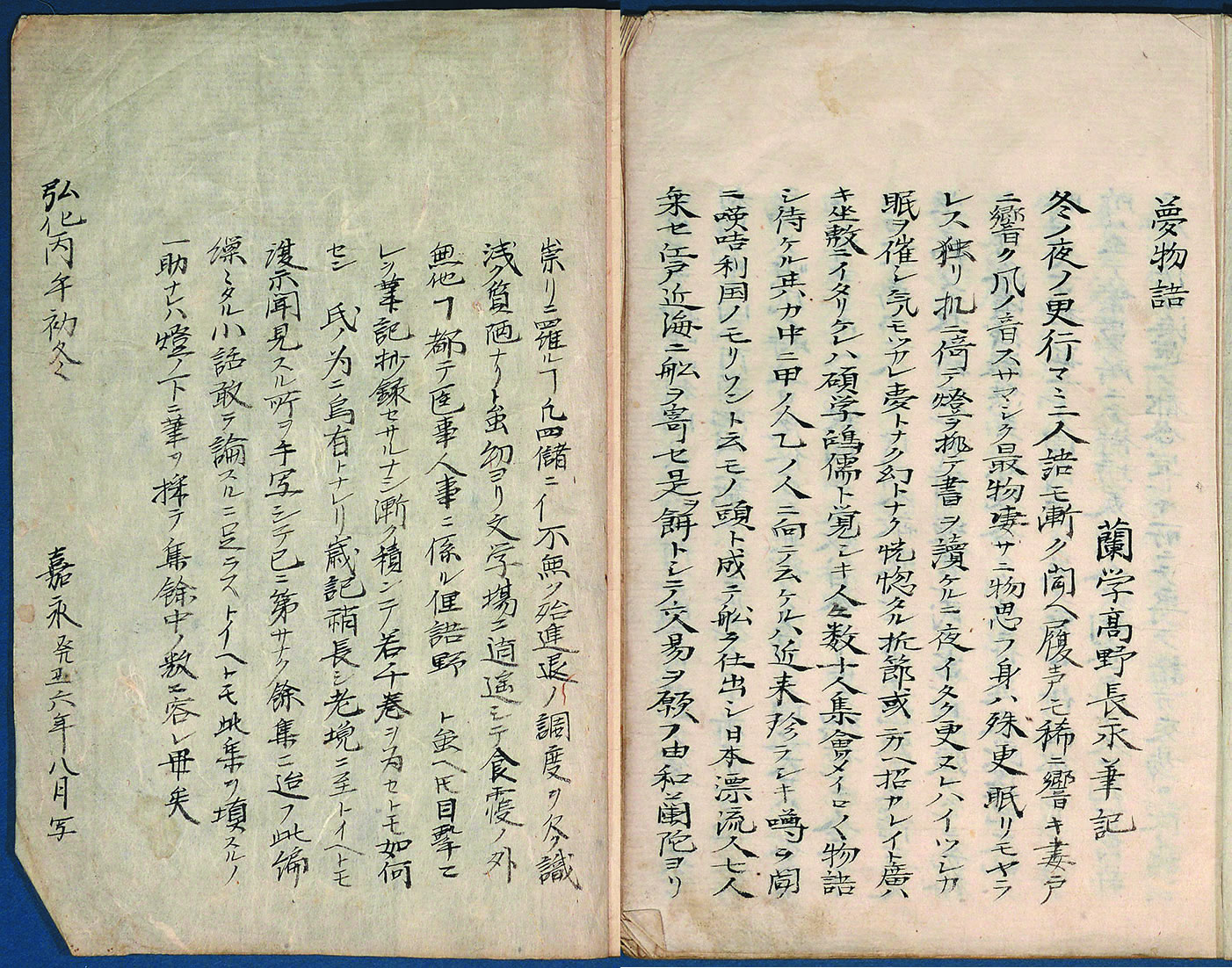
dream story
 台灣人
台灣人 English
 한국어
한국어 中文
中文 日本語
日本語